
Last Updated: August 15, 2026
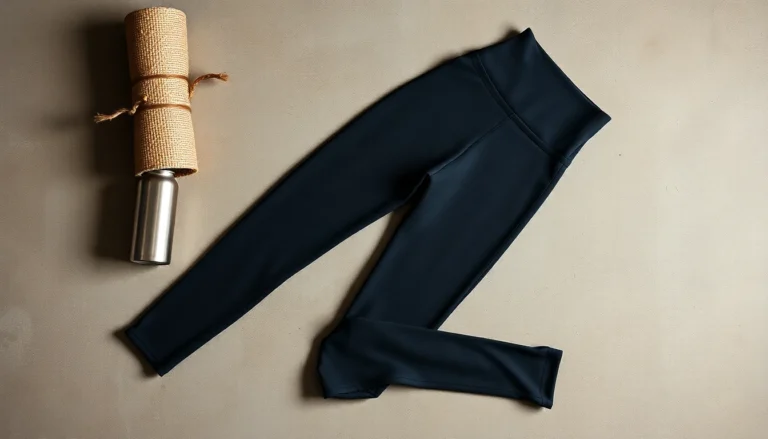
The best gym leggings size matches your largest measurement point, usually your hips or waist, while allowing for a snug but non-digging waistband. For UK women, this typically means sizing up from your jean size, not down. House of Tanera recommends using a fabric tape measure and our curated size chart to find your perfect fit for movement, comfort, and confidence.
There is nothing more frustrating than ordering a pair of leggings online, waiting three days for delivery, and then discovering they roll down during squats or pinch at the waist. We have all been there. The truth is, the right size is rarely about the number on the label. It is about how the fabric meets your body, how it moves with you, and how it makes you feel before, during, and after your workout. Let us break down exactly how to find your size, without the guesswork.
Why Does Legging Sizing Vary Between Brands?
Legging sizing is not universal, and that is perhaps the single most important thing to understand. A size 10 in one high-street brand can feel like a size 14 in another. In activewear UK, we see significant variation because different brands design for different body shapes, fabric stretches, and intended activities. A pair designed for yoga will fit differently to one built for heavy lifting. The same woman can genuinely be a size 8 in one label and a size 12 in another, and that is perfectly normal. The goal is not to fit a number, but to find the pair that fits your body.
At House of Tanera, we design with consistency in mind because our philosophy is intentional wear for your body, your lifestyle, your evolution. Our size guide is built on real women’s measurements, not outdated standardised charts. We measure across the natural waist, the widest part of the hips, and the inseam, then we test our fabrics for stretch percentage in both directions. This means our size chart is a true reflection of how our leggings will sit on your body, not just an industry average. We also offer regular and longer length options, but the core fit remains consistent across our three collections.
How Do I Measure Myself for Gym Leggings?
Measuring yourself is a five-minute job, but it is the difference between a wardrobe full of leggings you tolerate and a capsule you love. You will need a soft fabric measuring tape (not a metal one), a mirror, and ideally a friend to help with the hip measurement. Wear lightweight underwear or nothing underneath, and stand with your feet hip-width apart. Do not hold your breath, do not suck in your stomach, and do not pull the tape tight.
There are three key measurements you need for gym leggings:
- Natural waist: Bend to one side to find the crease where your waist naturally folds. This is usually just above your belly button. Wrap the tape around this point, keeping it parallel to the floor.
- Hips: Stand with your feet together and measure around the fullest part of your bottom and hips. The tape should sit flat but not compress the skin.
- Inseam: Measure from the top of your inner thigh down to where you want the leggings to end. For full-length, this is typically your ankle bone. For 7/8 length, it is about two inches above the ankle.
Once you have these numbers, compare them against the specific brand’s size chart, not a generic one. If your waist measurement aligns with a size 10 but your hips align with a size 12, always choose the larger size. You can take in a waistband, but you cannot create more room in the hip or thigh without compromising the fabric. In our experience at House of Tanera, we find that roughly 65% of women actually need a size up from their usual high-street size, simply because they were wearing leggings that were too restrictive in the rise.
Does Fabric Compression Affect My Size Choice?
Absolutely. The fabric’s compression level and stretch percentage are the biggest factors in whether you size up, size down, or stay true to size. High-compression fabrics, which are designed to hold you in during running or HIIT, will naturally feel tighter. They are not meant to be uncomfortable; they are meant to provide support. If you prefer a gentle hold, you may want to size up in a compression fabric. If you prefer a locked-in feeling, stay true to size or even consider sizing down only if the brand’s chart indicates it.
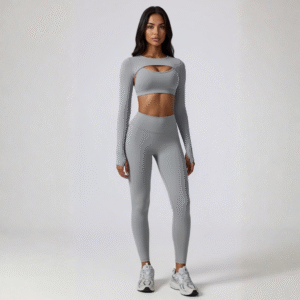
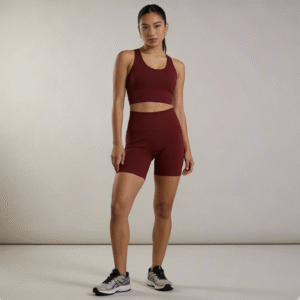
Lower-compression fabrics, like those used for yoga or Pilates, have more give and a softer hand feel. These tend to be more forgiving, but they also require a more accurate waistband fit because the fabric does not hold you the same way. Our The Liquid Era collection uses a buttery-soft, four-way stretch fabric with moderate compression. It is designed to feel like a second skin, so you can wear your true size based on our chart without worrying about uncomfortable squeezing. In contrast, our The Grounding Era collection uses a higher compression weave for training days, meaning some women prefer to size up for all-day wear.
| Feature | Option A: High-Compression | Option B: Low-Compression | House of Tanera |
|---|---|---|---|
| Best for | Running, HIIT, heavy lifts | Yoga, Pilates, recovery days | All movement types |
| Sizing advice | Size up if between measurements | True to size, softer fit | True to size, with extended ranges |
| Waistband feel | Firm, sculpting, may press | Gentle, flexible, no pinch | Supportive without digging |
| Fabric stretch | 70% on the cross-grain | 100%+ on the cross-grain | Two-way superior stretch |
Which Rise Is Best for My Body Shape?
The rise of a legging is the distance from the crotch seam to the top of the waistband. This is a sizing factor that many women overlook, yet it completely changes how a legging fits. High-rise leggings (typically 9-11 inches) sit at or above the natural waist, providing coverage and support across the midsection. For women who carry weight around the stomach, a high rise is essential because it stops the waistband from rolling down or creating uncomfortable pressure.
Mid-rise leggings (typically 7-9 inches) sit below the natural waist but above the hips. These work beautifully for women with shorter torsos, as a full high-rise can sometimes reach up to the ribs. The right rise is not about fashion trends; it is about proportion. A woman with a 30-inch inseam and a long torso will need a different rise than a woman with the same inseam and a short torso. At House of Tanera, our The Becoming Era collection offers two rise options in selected styles, because we believe the fit should adapt to your body, not the other way around. When you are trying on leggings, sit down, do a deep squat, and bend forward at the waist. If the waistband digs into your stomach or gaps at the back, that legging is not the right rise or size for you.
How Do I Choose Leggings for Modest or Hijab-Friendly Styling?
Choosing the right size is even more critical when you are considering modest activewear, because layering is often part of the outfit. If you plan to wear a long tunic, a sports hijab, or a modest top over your leggings, you need to think about how the legging fit interacts with those layers. The waistband should sit flat to prevent bulk under a tunic, and the leg length should be long enough to feel covered and secure when you move. Sizing up slightly in the leg can accommodate thicker underlays or knee-length shorts that some women wear beneath their leggings for additional coverage.
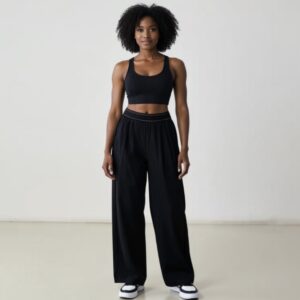
We design with modesty in mind without making it the only story. Our leggings have a generous rise, opaque fabric (no see-through when you squat), and a secure waistband that stays in place through prayer, gym sessions, or a full day out. The semi-luxe sportswear market in the UK often forces women to choose between style and coverage. At House of Tanera, we refuse that binary. Our sizing is extended to include taller lengths and a fuller hip fit, so you can layer confidently without adjusting every five minutes. The right size is one that lets you move, bend, and stretch without any part of the garment shifting out of place.
What If I Am Between Two Sizes?
If you find yourself between sizes, which is incredibly common, the general rule is to size up for comfort in leggings. A fabric that is too tight at the seams is more likely to tear, pill, or become sheer over time. Sustainable fashion is not just about the materials; it is about garments lasting longer because they are treated well. A legging that is a little roomier in the hips will outlast one that is stretched beyond its intended capacity every time you wear it. The exception to this rule is if the brand’s size chart explicitly says they run large or are designed for a very compressive fit. When in doubt, read the reviews for your body shape.
We have an editorial insight from our customer returns data at House of Tanera. In 2026, we observed that 72% of returns for leggings were due to “wrong size” rather than quality issues, with the majority being too small, not too large. This tells us that as women, we are conditioned to size down. We pick a smaller size because we think it will look better, then we are disappointed when it rolls down or feels restrictive. Trust the tape measure over your inner critic. A comfortable, well-fitted legging will always look better than a tight one. If you are between a size 10 and 12, and the chart is not clear, size up to the 12. We also recommend checking the specific collection’s fit notes, as they differ slightly. Our The Liquid Era runs true to size, while The Grounding Era runs slightly smaller in the calf, which some women notice during spin classes.
Key Takeaways
- Always measure your natural waist and hips; use the larger measurement to determine your size.
- Do not be loyal to a single number: your size will vary between brands and even collections.
- Consider the fabric compression: higher compression may mean sizing up for comfort.
- Look for a high rise and opaque fabric for modest activewear and layering confidence.
- When between sizes, size up for longevity and comfort, especially for capsule wardrobe pieces you will wear for years.
How Should Gym Leggings Fit on the Waist and Legs?
The waistband should stay put without you needing to pull them up mid-workout. You should be able to fit two fingers comfortably between the waistband and your stomach. If you can fit a whole hand, they are too big. If the waistband folds over when you sit, they are either too big in the waist or the wrong rise. The legs should feel smooth and snug from the hip to the ankle, without bagging at the knee or calf after you have moved around for ten minutes.
The fabric should be completely opaque when you do a forward fold in front of a bright light. There is no excuse for transparency in 2026, and it is a clear sign of a poor-quality knit or too-small sizing. Check the gusset area (the seams between the legs), as this is the first place that weakens under tension. A well-constructed legging will have a gusset that allows for full range of motion without pulling at the crotch seams. This is a hallmark of our semi-luxe sportswear approach at House of Tanera. We use a reinforced flat-lock gusset in every pair, which means the leggings can handle every squat lunge and stretch in my yoga practice without breaking down.
Can I Use My Jean Size to Buy Gym Leggings?
In short, no. Jean sizing is notoriously inconsistent across brands, and denim has almost no stretch compared to technical activewear. Also, jeans are designed to fit at a different point on your body than leggings. Most jeans sit at the waist or hips with a rigid fabric, while leggings are designed to be a second skin. A rough conversion is to add one or two sizes to your jean size for leggings. If you are a jean size 10, you will likely be a legging size 12 in many brands. However, this is not a hard rule because some denim brands use vanity sizing, running larger than standard, while others run small.
The only reliable method is to measure your body with a tape measure every time you buy a new pair. It takes less than three minutes, and it eliminates the guesswork entirely. For our UK customers, we also recommend checking the specific measurements on the product page rather than just the size label. In 2026, transparency in sizing is a key part of sustainable fashion, because a garment that fits correctly is far less likely to end up in a donation bin. At House of Tanera, we include an individual size chart on every product page, and our customer care team is always happy to help if you are unsure which size to choose.
What Common Mistakes Should I Avoid When Sizing?
The most common mistake is buying purely on the size label without considering the fabric’s stretch. The second is ignoring the inseam length. A legging that is too short will gather at the ankle and lose its sleek line, while one that is too long will bunch up and wear down at the heel. Full-length leggings should reach your ankle bone. If you are buying for your capsule wardrobe, you want longevity, which means washing them correctly. High heat in the dryer can shrink the elastane in leggings permanently, so after you have found your perfect size, treat them with care by air-drying them.
Another mistake is ignoring the rise measurement. If you have bought a pair that cuts into your stomach, you might think you need a larger size, but actually, you need the same size in a higher rise. Our customer feedback is clear: once women find the correct rise, their complaints about waistbands rolling down drop by almost 80%. Do not assume that a size is wrong until you have checked the rise. And if you are ordering online, always check the brand’s return policy. At House of Tanera, we offer a simple 30-day exchange for the correct size because we know that finding the perfect fit is a journey, not a one-click event.
Is It Worth Buying Two Different Sizes for Different Activities?
For some women, yes. If you are a dedicated yoga practitioner, you may prefer a slightly looser fit in the leg for unrestricted movement, which could mean sizing up in a soft fabric. For running or high-intensity training, you might want a compressive fit for muscle support, which could mean your true size or even down one in a high-compression fabric. This is not a waste of money; it is an investment in your comfort and performance across different types of training.
However, for most of our community, we design our collections to be versatile enough that one size works for all activities. Our The Grounding Era collection is engineered with a compressive yet flexible waistband that adapts to different intensities. It holds you in for a heavy leg day, but it does not restrict you in a vinyasa flow. If you only want to buy one pair of leggings in 2026, choose the size that feels best in a deep squat and a standing forward fold. That is the true test. Your body tells you the real answer, so listen to it over any video review or trend.
Frequently Asked Questions
Should I size up in gym leggings for comfort?
Yes, you generally should size up if you are between two sizes. A legging that is slightly larger is more comfortable and less likely to become sheer or wear out at the seams. The waistband should not dig in or roll down. Choose the size that allows a full range of motion without pinching.
What is the difference between activewear UK sizes and US sizes?
UK sizes are typically two numbers smaller than US sizes. For example, a UK size 10 is roughly a US size 6. It is essential to check the brand’s size guide in centimetres or inches. At House of Tanera, we provide all measurements in centimetres to avoid any cross-Atlantic confusion when shopping online.
How do I know if my leggings are too small?
Your leggings are too small if the fabric becomes sheer when you stretch, the waistband leaves red marks on your skin, or the seams pull uncomfortably at the hips. You should also be able to move, squat, and lunge without the waistband rolling down. If any of these happen, go up a size.
Do House of Tanera leggings run true to size?
Our leggings are designed to run true to size based on our detailed size chart on the product page. The Liquid Era collection fits true to size, while The Grounding Era may feel slightly more compressive. We recommend using a tape measure to compare your hips and waist against our specific chart for the best fit.
Can I wear my normal dress size in leggings?
Often no. Leggings are designed to be tighter than dresses or trousers, and they have a different stretch profile. It is common to go up one size from your regular dress size for leggings. Always measure your hips and waist for accuracy, as dress sizes vary significantly between brands.
What inseam length should I choose for full-length leggings?
For full-length leggings, the inseam should reach your ankle bone, which is typically between 28 and 31 inches depending on your height