
Last Updated: February 18, 2026
The Day I Realised My Clothes Were Working Against Me
It was a typical Wednesday in February 2026. I was dressed for a day of back-to-back commitments, from a morning studio session to afternoon meetings. By 11am, I was distracted. Not by my schedule, but by a persistent itch at my neck, a tight waistband, and fabric that felt stiff and unyielding. My clothes, though stylish, had become a source of constant, low-grade irritation. They weren’t working with me; they were working against me. That was the catalyst.
This experience is why we talk so passionately about soft comfortable fabrics. They are not a luxury or an afterthought. They are the essential foundation of clothing that supports you, physically and mentally, from dawn until dusk. At House of Tanera, we believe your comfort is non-negotiable. It is the starting point for everything we design.
Soft comfortable fabrics are materials engineered or chosen for their gentle touch, breathability, and ease of movement. They are the difference between dressing for your life and merely covering your body. In 2026, this is the core of intentional fashion.
Why Intentional Fashion Matters in 2026
The conversation has moved on from sheer volume. We are now in an era of conscious consumption, where every purchase is a considered choice. Intentional fashion is about aligning your wardrobe with your actual life, not a fleeting trend. It prioritises how you feel over how you are perceived in a single moment.
Consider a client of ours, a graphic designer who works from home but needs to be camera-ready for client calls. Her pain point was the “zoom shirt”—something smart but unbearably stiff. She needed soft comfortable fabrics that looked polished on screen but felt like a second skin. Her solution was a capsule of adaptive wear that moved seamlessly from her home office to a coffee shop meeting.
The outcome? Less decision fatigue, more confidence, and clothing that supports her creative flow rather than disrupting it. This is the practical power of building a wardrobe with intention in 2026.
How We Approach Adaptive Fashion at House of Tanera
Our philosophy is simple: design for reality. We start with the fabric, seeking out the most soft comfortable materials that also possess durability and a beautiful drape. We think about how a seam will feel after eight hours, how a neckline sits, and how a garment moves with you, not against you.
This is the heart of our adaptive wear. It’s clothing designed to adapt to your day, your body, and your needs. From the studio to the school run to a relaxed dinner, each piece is engineered for versatility without compromising on comfort or style. Explore our approach to this on our main site.
Inclusive sizing is a non-negotiable part of this. Comfort is universal, and soft comfortable fabrics should be accessible to all. We are committed to a fit that honours different body shapes, because true comfort is impossible without a good fit. Quality is our benchmark, ensuring every piece from House of Tanera becomes a long-term companion in your wardrobe.
Building Your Intentional Wardrobe: A Step-by-Step Guide
Transitioning to a wardrobe centred on soft comfortable fabrics is a process, not an overnight overhaul. Follow this practical guide to build a collection that works for you.
1. The Honest Audit
Empty your wardrobe. Be ruthless. For each item, ask: “Do I feel physically at ease in this?” If the fabric is scratchy, restrictive, or irritating, it’s working against your goal of comfort. Set these pieces aside.
2. Identify Your Core Scenarios
List your weekly activities. Work (office or home), exercise, social, relaxation. Identify where your current wardrobe causes discomfort. These gaps are your priority for investment in soft comfortable fabrics.
3. Invest in Foundational Pieces
Begin with versatile basics in supremely soft comfortable fabrics. A perfect tee, tailored trousers with stretch, a relaxed knit. These are the building blocks of your elevated casual wear.
4. Master the Art of Layering
Comfort is also about temperature regulation. Layer lightweight, breathable fabrics. A soft merino base under a linen-blend shirt, for example, creates adaptability for changing environments.
5. Care for Your Fabrics
Follow care labels meticulously. Wash gentle cycles with similar colours. Air dry where possible. Proper care preserves the hand-feel and longevity of your soft comfortable fabrics.
6. Evolve Seasonally
Your needs change. In 2026, consider fabric weight. Opt for breathable linens and cottons in summer, moving to cosy, soft wool blends and brushed-back knits for winter comfort.
Common Wardrobe Challenges & How We Solve Them
“I can’t find smart clothes that are actually comfortable.” This is the most frequent frustration we hear. The solution lies in fabric choice and cut. We use high-twist cottons and fine wool blends that look polished but feel soft. Seams are flat and placed away from stress points.
“Everything stretches out of shape by lunchtime.” Durability is key. Our soft comfortable fabrics are tested for recovery. They contain just enough elastane or are woven in a way that allows movement but snaps back, holding their shape day-long.
“I feel frumpy in comfortable clothes.” Comfort does not mean baggy. It means precision. Our designs focus on clean lines and considered silhouettes that flatter. The soft fabric provides the ease; the cut provides the style.
A Practical Comparison: Fast Fashion vs High Street vs Premium Adaptive Wear
Let’s be clear and practical. Fast fashion soft fabrics often rely on cheap polyester or low-grade cotton. They may feel soft initially but pill quickly, lose shape, and can irritate sensitive skin. They are a short-term solution.
The high street offers better quality, with more natural fibres. However, cuts are often trend-led and not designed for all-day adaptive comfort. The focus is on the initial look, not the eighth-hour feel.
Premium adaptive wear, like our collections, starts with the long-term experience. We source certified, longer-staple cottons, premium linen, and merino wool. Every design element, from the seam to the fibre, is chosen for enduring comfort and style. It’s an investment in how you feel every day.
Styling Scenarios: From Studio to Street
Seeing is believing. Here’s how soft comfortable fabrics create versatile clothing for real life in 2026.
The Hybrid Workday
Start with wide-leg trousers in a soft, fluid fabric. Pair with a simple, fine-gauge merino wool roll-neck. It’s warm, breathable, and looks intelligent. Add a structured blazer for external meetings, removing it at your desk for unimpeded comfort.
Weekend Ease
A dress in a heavy, soft jersey or French terry is a one-and-done solution. Layer with a long-line cardigan in a brushed-back fabric for cosy warmth. The fabrics move with you, from a morning walk to an afternoon spent reading.
Travel & Transit
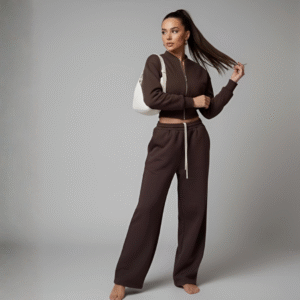
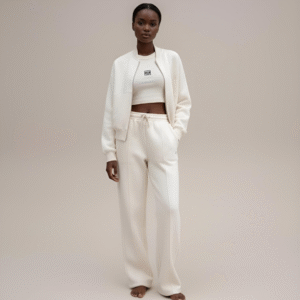
Opt for a coordinated knit set—a crew neck and relaxed trousers. The fabric is soft, stretchy, and resistant to wrinkles. It feels like loungewear but presents a put-together, minimalist wardrobe look for any journey.
The Quality Over Quantity Philosophy
This is not just a slogan; it’s a financial and stylistic strategy. Calculate the cost-per-wear. A £150 garment worn 100 times costs £1.50 per wear. A £30 garment worn twice before it pills or distorts costs £15 per wear. The maths of soft comfortable fabrics that last is compelling.
Sustainable fashion in 2026 is intrinsically linked to this. It means choosing natural, biodegradable, or recycled fibres that are gentle on the planet and your skin. It means supporting better supply chains. But fundamentally, it means buying less and wearing more.
Your wardrobe should be a curated collection of favourites, not an archive of regrets. Each piece of versatile clothing in soft comfortable fabrics should earn its place by making your daily life noticeably better.
Frequently Asked Questions
What are the best soft comfortable fabrics for sensitive skin?
Look for natural fibres like long-staple cotton (e.g., Supima), linen, and silk. Merino wool is also excellent as it’s naturally soft and odour-resistant. Avoid cheap synthetic blends and always check the fibre content.
How do I keep soft fabrics from looking sloppy?
The cut is everything. Seek clean lines, precise tailoring, and fabrics with good structure or drape. A soft fabric in a sharp silhouette looks intentional, not lazy.
Can comfortable fabrics be suitable for a formal office?
Absolutely. Fine wool crepe, high-quality ponte roma, and soft viscose blends have a sophisticated drape and feel. The formality comes from the silhouette and colour, not from stiff, uncomfortable material.
How do I transition my wardrobe without starting over?
Start with your most-worn items. Replace your everyday trousers or go-to tops first with versions in soft comfortable fabrics. Build outwards from these core pieces.
Are natural fibres always better than synthetics for comfort?
Mostly, yes, for breathability and feel. However, modern technical synthetics or blends (like a small percentage of elastane for stretch) can enhance comfort and durability when used responsibly.
What’s one piece of adaptive wear I should invest in first?
A perfect pair of trousers. You wear them constantly. Find a pair in a soft, stretchy fabric with a flattering cut that works for multiple scenarios. It will revolutionise your daily comfort.
Key Takeaways
- Soft comfortable fabrics are the non-negotiable foundation of intentional fashion in 2026.
- True comfort combines gentle materials, inclusive sizing, and thoughtful design that adapts to your life.
- Building a capsule wardrobe around these principles reduces decision fatigue and increases daily confidence.
- Quality, durable fabrics offer better long-term value and align with sustainable fashion principles.
- Comfort and style are not mutually exclusive; they are achieved through precision cuts and premium materials.
- Start your transition by auditing your wardrobe and replacing your most-worn, least-comfortable items first.
Ready to Experience the Difference?
The journey to a wardrobe that truly supports you begins with a single, considered choice. It begins with prioritising how you feel from the moment you get dressed until the moment you undress. At House of Tanera, this philosophy guides every stitch, every seam, and every fabric we source.
We invite you to move beyond compromise. Let’s discuss how our focus on soft comfortable fabrics and adaptive wear can transform your daily experience. Your comfort is the most important trend of 2026 and beyond.
Begin your journey to intentional style and enduring comfort.