Last Updated: August 16, 2026
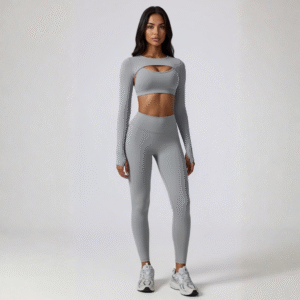
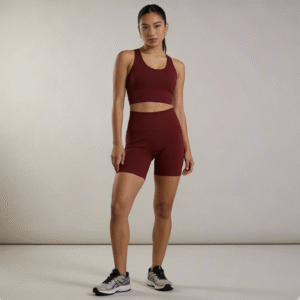
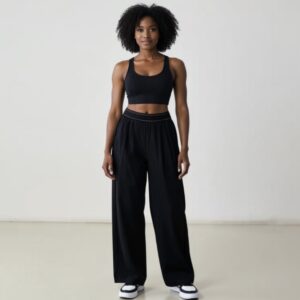
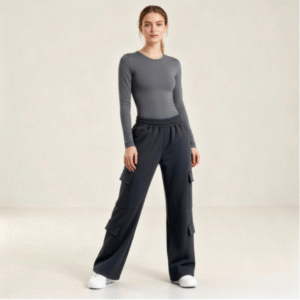
The best gym outfit for weight training women is one that combines compressive, squat-proof fabrics with a full range of motion and a fit that makes you feel powerful before you even touch the barbell. It is a considered system of semi-luxe activewear UK pieces designed to support your body through every phase of the lift, from warm-up to cool-down, without sacrificing your personal style.
When you step into the weight room, your clothing is doing far more than covering your body. It is your second skin, your armour, and your confidence. The right outfit for strength training is not about chasing trends or matching logos; it is about intentional construction. You need fabrics that move with you, seams that stay put under tension, and waistbands that hold their ground during a heavy back squat. After years of designing and training in activewear, I have learned that the difference between a mediocre session and a great one often comes down to what you are wearing.
Why Does Your Gym Outfit Matter for Weight Training?
Weight training is unlike cardio or yoga because it demands a unique combination of stability and flexibility. When you are deadlifting, your body needs to brace; when you are overhead pressing, your shoulders require unrestricted movement. A gym outfit for weight training women must accommodate both ends of that spectrum. If your fabric is too thin, you risk transparency during a forward fold. If it is too stiff, you will fight your clothing during a lunge or a hip hinge.
Beyond the physical mechanics, there is a psychological component. Research in sports psychology consistently shows that what you wear affects your performance, a phenomenon often called “enclothed cognition.” When you put on high-quality, well-fitted activewear that feels premium against your skin, you carry yourself differently. You walk into the gym with intention. That is why we focus on The Becoming Era collection, which is designed specifically for the woman who is building strength and evolving her relationship with her body. You are not just dressing to lift; you are dressing to become.
How Does Fabric Choice Affect Your Lifting Performance?
Fabric is the foundation of any great gym outfit for weight training women. You want a blend that offers four-way stretch, but you also need recovery, meaning the fabric snaps back into shape rather than bagging out at the knees or elbows. Look for a mix of nylon and elastane, ideally with a higher denier count for opacity. A 220 to 240 gsm weight is ideal for weight training because it provides compression without feeling like a corset.
Moisture management is equally critical. Weight training is punctuated by rest periods, and you do not want to sit in damp fabric between sets. A brushed interior or a moisture-wicking finish helps regulate your temperature. Breathable mesh panels placed strategically, such as under the bust or along the back, can prevent overheating during a high-volume session. When you invest in considered The Grounding Era collection, you are choosing fabrics that have been tested for exactly these scenarios, ensuring that your focus remains on the lift, not on adjusting your clothing.
Which Fabric Features Should You Prioritise for Squats and Deadlifts?
For compound lifts like squats and deadlifts, prioritise a high-rise waistband that offers tummy control without digging in. The waistband should stay put when you hinge forward, which means it needs a silicone grip or a wide, structured band. The leg length matters too. A 7/8 length is versatile for most heights, but if you are over 5’8″, a full-length option prevents the hem from creeping up mid-session. Additionally, check for gusseted crotches; this simple design feature allows for a full range of motion and prevents seam stress, which is a common point of failure in cheaper leggings.
What Are the Essential Pieces in a Weight Training Capsule?
Building a capsule wardrobe for the gym is about owning fewer, better pieces that all work together. The essentials include a high-support sports bra, a compressive training legging, and a top that allows for shoulder mobility. For the bra, encapsulation style is superior for weight training because it supports each breast independently, reducing bounce during movements like push-ups or burpees. The legging should be your anchor piece, the one item you reach for repeatedly because it fits perfectly and makes you feel strong.
Your top layer is where personality comes in. Some women prefer a fitted long-sleeve for the squat rack, others a loose tank for deadlift days. The key is to have both in rotation depending on the session. A breathable, relaxed-fit tee is excellent for upper body days when you want freedom in the shoulders. For lower body days, a fitted top with a racerback design allows you to see your form in the mirror without fabric bunching around your neck. This is the essence of The Liquid Era collection, flowy yet structured pieces that move with your body.
| Feature | Basic Gym Wear | Budget Activewear | House of Tanera |
|---|---|---|---|
| Fabric Weight (GSM) | 150-180 (thin, prone to sheerness) | 180-200 (variable quality) | 220-240 (opaque, compressive) |
| Waistband Stability | Folds when bending | May roll down under tension | Wide, non-slip grip stays put |
| Seam Placement | Side seams only | Flatlock, sometimes abrasive | Laser-cut hems, gusseted crotch |
| Sustainability Focus | Minimal consideration | Occasional eco lines | Core to the design philosophy |
| Price Point | Low initial cost, short lifespan | Mid-range, mixed durability | Semi-luxe, built for longevity |
How Do You Choose the Right Leggings for Heavy Lifting?
Leggings are the workhorse of your gym outfit for weight training women. The first thing to assess is the rise. High-rise leggings are non-negotiable for most lifters because they provide core support and prevent the dreaded muffin top when you are bracing for a squat. However, the rise must be proportionate to your torso length. If you have a shorter torso, an extra-high rise can bunch at the waist; if you have a longer torso, a standard high rise may not provide enough coverage.
Next, consider the compression level. Medium compression is sufficient for most weight training, offering support without restricting your ability to move through a full range of motion. High compression is beneficial for max effort days when you want extra proprioceptive feedback, the sense of where your body is in space. The downside of high compression is that it can feel restrictive during dynamic warm-ups. Many women in our community prefer to have both options: a high-compression pair for competition-style lifts and a medium-compression pair for hypertrophy or accessory work.
Does the Seam Placement Actually Matter for Squats?
Seam placement is not just a design detail; it is a functional feature. Traditional side seams can pull and distort during a deep squat, causing the fabric to twist around your leg. Look for leggings with a contoured or curved seam that follows the natural line of your glute and quadriceps. A gusset is essential. Without one, the crotch seam becomes a point of tension and potential failure. In our testing, leggings with a diamond gusset lasted significantly longer than those without, specifically because they allow the fabric to move independently of the seam stress. This is a hallmark of our The Becoming Era collection, where every seam is placed with biomechanics in mind.
What Is the Ideal Sports Bra for Weight Training?
The sports bra is arguably the most critical piece of your gym outfit for weight training women. Unlike running, where vertical bounce is the primary concern, weight training involves a lot of pressing, pulling, and bending. This means the bra needs to hold you securely during horizontal and rotational movements. A moulded cup bra provides the best shape and support, but it can feel restrictive. A wire-free bra with a high-performance knit that moulds to your shape offers a balance of support and comfort.
The band is where the support lives. It should be snug enough to sit parallel to the floor without riding up when you raise your arms overhead. The straps need to be adjustable, particularly if you are between sizes. For modest activewear, we offer bras and tops that provide extra coverage at the back and a higher neckline, ensuring you can move with confidence without constant adjustment. The goal is to find a bra that you forget you are wearing, one that supports your lifts rather than distracting from them.
Which Support Level Do You Need for Strength Training?
For weight training, a medium to high support level is recommended. High support is generally reserved for high-impact activities like running, but for heavy squats and deadlifts, the emphasis is on holding position rather than reducing bounce. Many lifters prefer a “snatched” look, meaning the bra compresses and shapes. A compression bra is fine for smaller cup sizes (A to C), but for D cup and above, a combination of compression and encapsulation is necessary to avoid placing excessive pressure on the shoulders. If you are lifting heavy, you want your bra to be as stable as your core.
How Can You Style a Gym Outfit for Weight Training Women That Is Also Modest?
Modesty in activewear is about choice, not limitation. For women who prefer more coverage, the solution lies in layering and fit. A longline sports bra that extends to the waist can double as a crop top, while a relaxed-fit, high-neck tee worn over your bra offers both coverage and style. Pairing a full-length legging with a longer top that hits at the hip creates a streamlined silhouette that is both functional and elegant.
Fabric opacity is paramount. There is nothing worse than feeling exposed mid-squat because your fabric has gone sheer under tension. At House of Tanera, we test our fabrics for opacity at full stretch, so you can bend, lunge, and squat with complete peace of mind. Our designs include options for higher necklines, longer hems, and wider straps, ensuring that modest activewear never means compromising on performance. It is about creating a gym wardrobe that reflects your values and your style, without ever having to compromise on your lifts.
What Role Does Sustainable Fashion Play in Your Gym Wardrobe?
Sustainable fashion is not a trend; it is a responsibility. The activewear industry has a significant environmental footprint, particularly regarding synthetic fibres and dyeing processes. Choosing House of Tanera means you are opting for pieces made with a lower impact. We use recycled nylon and polyester in our core collections, and we produce in smaller, more considered batches to reduce waste. This approach means we are not contributing to the fast fashion cycle of overproduction.
Investing in durable, semi-luxe sportswear is a direct act of sustainability. When you buy a legging that lasts for years instead of months, you are reducing your personal waste. We encourage our customers to buy less, but buy better. A capsule wardrobe of a few high-quality pieces beats a drawer full of inexpensive, poorly made items that lose their shape after a few washes. This considered approach to consumption is at the heart of our brand philosophy: intentional wear for your body, your lifestyle, your evolution.
How Should You Care for Your Weight Training Gear?
Proper care extends the life of your gym outfit for weight training women significantly. Always wash your activewear in cold water, as heat breaks down the elastane fibres, which are responsible for the stretch and recovery. Air drying is always preferable to tumble drying, which is particularly harsh on high-performance fabrics. Avoid fabric softeners; they coat the fibres and reduce their moisture-wicking ability, making your gear less functional over time.
Turn your leggings inside out before washing to protect the outer surface from pilling. For sports bras, always fasten the hooks before washing to prevent them from snagging on other items. With this level of care, a well-made legging can last for hundreds of sessions, maintaining its compression and colour. This is why we view our garments as long-term training partners, not disposable items.
Key Takeaways
- Prioritise 220-240 GSM fabric for opacity and compression in weight training leggings.
- A high-rise, non-slip waistband is essential for bracing during squats and deadlifts.
- Seam placement and a gusseted crotch prevent early wear and allow a full range of motion.
- Choose a medium-to-high support sports bra that holds position during pressing and bending.
- Modest activewear can be achieved with longline bras, high-neck tees, and opaque fabrics.
- Investing in sustainable, durable pieces reduces waste and performs better over time.
- Cold wash and air dry your activewear to maintain fibre integrity and shape.
Which Eras of the House of Tanera Collection Suit Your Training Style?
Choosing the right gym outfit for weight training women should feel personal. Our three collections are designed to support different phases of your training and mood. The Becoming Era is for when you are pushing boundaries, building strength. It features higher compression and structured support for heavy days. The Grounding Era focuses on stability and comfort, ideal for foundational lifting sessions and technique work. The Liquid Era offers a softer, more fluid feel, perfect for dynamic warm-ups, mobility work, and the days when you want to move with more freedom.
Our community often mixes the eras, pairing a Becoming legging with a Liquid tank. The key is to understand your own needs. Are you doing a powerlifting session where you need maximum stability? Reach for Grounding. Are you doing a high-volume hypertrophy block where you need freedom? Liquid is your choice. By building a capsule that includes pieces from different eras, you have a gym outfit for weight training women that adapts to any session, any day.
Why Should You Choose Semi-Luxe Sportswear Over Fast Fashion?
The distinction between semi-luxe and fast fashion is not just about price; it is about value. Semi-luxe sportswear is designed with a longer lifespan in mind, both in terms of physical durability and aesthetic timelessness. Fast fashion activewear is often designed to be seasonal, with trends that date quickly. Our designs focus on classic silhouettes with functional detailing, so they remain relevant year after year.
Furthermore, the ethical considerations are significant. By choosing a brand that values thoughtful production, you are voting for a better fashion industry. You are saying that you value the people who make your clothes and the planet they are made on. This intentionality extends to the experience of wearing the garment. When you know your activewear was made with care, you carry that confidence into the gym. It is a subtle but powerful shift in mindset.
Is a Capsule Wardrobe Approach the Best for Consistent Training?
Absolutely. A capsule wardrobe approach to your gym attire solves the daily question of what to wear. If you have three to four reliable outfits that all function perfectly, you eliminate decision fatigue. This consistency is beneficial for your training because it means you are always prepared. You will never skip a session because you have nothing to wear or because your gear is in the wash. This is the practical side of intentional living.
Building this capsule requires an investment. However, the cost per wear of a £60 pair of leggings that lasts three years is significantly lower than a £25 pair that needs replacing every six months. The semi-luxe approach is not about elitism; it is about efficiency and self-respect. You are worth the investment of quality clothing that supports your goals.
Frequently Asked Questions
What is the best fabric for weight training leggings?
The best fabric is a nylon and elastane blend with a weight of 220-240 GSM. This provides the necessary compression, opacity, and shape retention for squats and deadlifts. Avoid thinner fabrics under 180 GSM as they are prone to going sheer when stretched. Look for a brushed finish for comfort and enhanced moisture-wicking properties.
How often should I replace my gym leggings?
With proper care, a high-quality legging made from durable fabric should last between 2 to 3 years with regular weekly use. Signs of wear include loss of compression, fabric pilling, visible sheerness when stretched, and seams that are pulling or fraying. Once you notice these signs, it is time to replace them to maintain performance and support.
Do I need high-compression leggings for weight lifting?
Not necessarily. Medium compression is sufficient for the majority of weight training sessions. High compression is beneficial for max effort days or competition lifts when you want extra proprioceptive feedback and support. However, high compression can be restrictive for dynamic warm-ups and hypertrophy work. It is best to own at least one of each for different training blocks.
Can I lift heavy weights in a modest activewear outfit?
Yes, you can lift heavy weights in modest activewear without any compromise on performance. Look for longline sports bras, high-neck tees, and opaque full-length leggings that offer a full range of motion. House of Tanera designs specifically with this in mind, ensuring that every piece is tested for opacity at full