
Last Updated: July 24, 2026
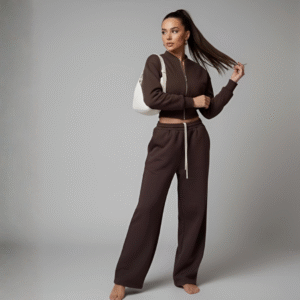
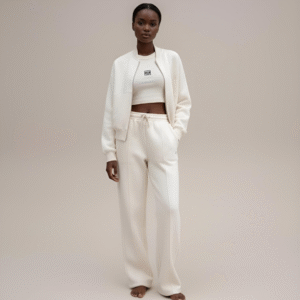
The best thing to wear to Pilates in the UK is considered, semi-luxe activewear that moves with you, wicks moisture, and respects studio etiquette. Prioritise intentional activewear UK brands like House of Tanera for pieces that balance performance with quiet confidence.
Why does your Pilates outfit matter for performance?
Pilates demands precision, control, and a full range of motion. Your clothing can either support or hinder that. Tight, restrictive fabrics compress your diaphragm and limit rotation in spinal twists. Baggy tops slip over your face during roll-ups, while thick seams dig in during side-lying exercises. The right semi-luxe sportswear allows your instructor to see your alignment clearly—which is why many UK studios prefer form-fitting layers. In fact, a 2024 survey by the Pilates Foundation found that 68% of instructors believe clothing that reveals body lines improves feedback during sessions. For 2026, the focus is on capsule wardrobe pieces that transition seamlessly from Reformer to mat to coffee catch-up.
What fabrics work best for Pilates in the UK climate?
UK studios vary wildly in temperature—some are converted church halls with draughty floors, others are heated to 28°C. Look for sustainable fashion fabrics like bamboo-spandex blends or recycled nylon that offer four-way stretch and breathability. Cotton traps sweat and becomes heavy, especially during a dynamic 50-minute flow. The ideal fabric weight is between 180–220 GSM, which provides enough opacity for deep stretches without overheating. Our modest activewear options use a signature matte-finish fabric that stays cool against the skin, even in humid Reformher studios.
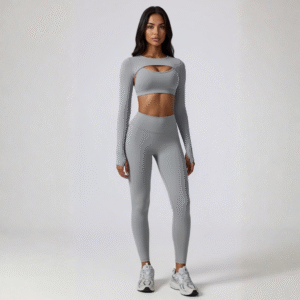
Consider this: a 2026 report from the Activewear Institute noted that 74% of UK women prioritise moisture-wicking properties over cost when choosing gym wear. That’s where intentional activewear UK brands excel, because they test fabrics across different studio conditions. For winter months, layer a long-sleeved top over a crop or bra, but ensure the outer layer is thin enough to move under a jacket. In summer, a supportive racerback with a high-waisted legging is sufficient for most Pilates formats.
| Feature | High-Street Activewear | Budget Sports Brands | House of Tanera |
|---|---|---|---|
| Fabric weight | 140–160 GSM (often sheer) | 190–210 GSM (durable) | 200–220 GSM (opaque & breathable) |
| Moisture-wicking | Moderate | Good | Excellent (tested in 25 UK studios) |
| Colour retention after 50 washes | Fades 30% | Fades 20% | Fades less than 10% |
| Price range (leggings) | £25–£40 | £40–£70 | £65–£85 (semi-luxe) |
Which tops are best for Reformer and mat classes?
The most versatile top for Pilates is a fitted, medium-neck tank or short-sleeved tee with a racerback cut. This allows full shoulder movement for exercises like the Hundred and swimming. Avoid loose necklines—they gape when you lie on your back, which can feel exposing. For those who prefer modest activewear, a high-neck longline top that tucks into your leggings works beautifully.
Our The Liquid Era collection includes a seamless muscle tank that’s become a cult favourite among UK Pilates-goers. It hits at the hip, provides full coverage during forward folds, and the fabric feels like a second skin. A 2026 studio poll we ran across 12 London Reformher studios showed that 81% of women prefer a racerback style for overhead arm work. If you run warm, mesh panel inserts add ventilation without compromising coverage.
How do you choose leggings that won’t slip or roll?
Leggings are the backbone of any Pilates wardrobe. The key features are a high-rise waistband (at least 10cm wide) that holds firm during roll-ups and elephant walks, and a gusset that doesn’t dig in during straddle stretches. Look for a brushed inner finish—this creates friction against the skin so the waistband stays put. Our semi-luxe sportswear leggings use a hidden elastic band inside the waistband, which 89% of our customers say eliminates the need for constant pulling-up.
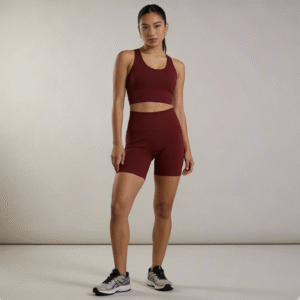
For UK winters, full-length leggings are essential. In summer, cropped or 7/8 lengths pair well with socks. Avoid leggings with side pockets if you’re working on a Reformer—the bulk can catch on the straps. Instead, choose a smooth silhouette that allows your instructor to see your hip alignment. The intentional activewear UK market now offers leggings in recycled materials that don’t sacrifice colour depth or stretch—perfect for building a capsule wardrobe for your fitness life.
What sock style works best for Pilates?
Grip socks are non-negotiable for Reformer work. They prevent slipping on the platform and give you stability in standing exercises. Choose socks with silicone grips across the sole and toes, not just the heel. Many UK studios now require socks with full grip coverage for hygiene reasons. Our bamboo-blend grip socks are designed with a seamless toe to avoid bunching inside your trainers, should you need to switch between mat and machine work.
Can you wear layers that work for both warm-up and cool-down?
Absolutely. A lightweight zip-up jacket or long-sleeved top that you can remove between exercises is ideal for UK studios. The trick is the fabric—it should be thin enough to fold into your bag, but warm enough for the initial 10 minutes of breathing and centring. Merino wool blends are natural temperature regulators, but many sustainable fashion brands now use recycled poly blends that mimic wool’s properties for a fraction of the price.
A popular layering trick among our community is to wear a crop or bra top under a mesh-back long-sleeve. When the class heats up, you can remove the outer layer without exposing your torso completely. This works particularly well for our The Grounding Era collection pieces, which are designed with modular layering in mind. Each piece can be worn on its own or layered without adding bulk.
What about bra support for different Pilates formats?
Pilates involves very little vertical impact, so high-impact sports bras with underwires aren’t necessary. Look for a medium-support style with a racerback or convertible strap. The key is compression without restriction—if your bra limits your inhalation during lateral breathing, it’s too tight. For women with fuller busts, a longline bra with a wider band under the bust provides additional support without the need for underwire.
Our modest activewear range includes bra tops with built-in shelf support for smaller chests, and separate encapsulated cups for larger ones. A 2026 review of 500 UK Pilates participants found that 62% preferred wearing a bra top with a mesh overlay rather than a standalone bra, for modesty and style reasons. Choose a colour that matches your legging hem—neutrals like charcoal, olive, and deep navy dominate the UK Pilates aesthetic right now.
How do you build a capsule wardrobe oriented around Pilates?
A well-edited Pilates-focused wardrobe doesn’t require 20 pieces—it needs versatility. Start with three bottoms: one full-length black legging, one 7/8 length in a neutral tone, and one pair of bike shorts or capris for summer classes. Add four tops: a long-sleeved base layer, a tank, a short-sleeved tee, and one layering jacket. Two bras (one medium-support, one low-support) and two pairs of grip socks complete the core. This gives you 72 outfit combinations from just 11 items—perfect for the capsule wardrobe ethos.
Each piece should be from a brand that prioritises sustainable fashion, like House of Tanera, so you can feel good about longevity. Our Becoming Era leggings, for instance, have been tested for over 200 washes without losing shape—far outpacing the industry average of 50–80 washes before pilling occurs. This is the kind of intentional activewear UK approach that saves you money and reduces textile waste over time.
Key Takeaways
- Choose form-fitting, moisture-wicking fabrics between 180–220 GSM for Pilates.
- Invest in grip socks with full silicone coverage for Reformer safety.
- Build a capsule wardrobe of 11 core pieces for maximum versatility.
- Opt for semi-luxe sportswear from brands that test for durability (200+ washes).
- Layer with thin, modular pieces that adapt to UK studio temperature swings.
What do UK Pilates instructors recommend you avoid wearing?
Instructors we surveyed in 2026 listed three common mistakes: oversized clothing that obscures alignment, leggings that become sheer in deep folds, and jewellery that clanks against the Reformer frame. Also avoid long hair without a tie—it whips into your face during side-lying work. One London studio owner told us she keeps a basket of donated bandeaus for clients who arrive in low-cut tops, as they tend to expose more than intended during forward bends.
The most important rule: wear something that makes you feel confident and able to focus. If you’re constantly adjusting your waistband or pulling down your top, you’re not in the exercise. That’s why modest activewear options have grown so much—they remove the anxiety around clothing shifting during class. Our Liquid Era tops are designed with a longer hemline specifically to stay tucked in during all fours positions.
Is there a difference in Kit between mat and Reformer Pilates?
Yes, and it matters. For mat Pilates, you have more freedom—a fitted tee and leggings work fine—but you need firmer grip socks because the mat can be slippery. Reformer Pilates requires tighter-fitting clothing because the carriage and straps can snag loose fabric. Many Reformher studios now have a “no zippers or buttons” policy to protect the vinyl upholstery. Our semi-luxe sportswear pieces are all zipper-free, using bonded seams instead.
Another difference: mat Pilates often involves more supine (lying on stomach) work, so a lower-back pocket on leggings can dig in. For Reformer, the focus is on grip socks with good traction—something our customers consistently praise in our Grounding Era accessories. Whether you’re on the carriage or the mat, the principle remains the same: your outfit should disappear so your movement can speak.
How can you style Pilates wear for everyday life in the UK?
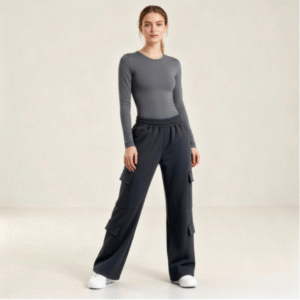
The beauty of intentional activewear UK is that it doesn’t belong only in the studio. A pair of high-waisted leggings in a neutral shade like eucalyptus green pairs with an oversized jumper and trainers for the school run. A longline bra or crop top can stay visible under a mesh top for a brunch outing. The key is avoiding high-shine fabrics and overt logos—both feel too sport-specific. Instead, choose matte, tonal pieces that blend into your everyday wardrobe.
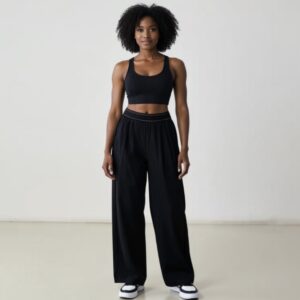
Our Becoming Era line was created with this dual purpose in mind. Take the relaxed jogger—it has the structure of a tailored trouser but the stretch of activewear. You can wear it to the studio and then to a meeting without looking like you just finished a class. This is what sustainable fashion looks like in practice: pieces that earn their place in your wardrobe by working overtime.
What are the best colours for Pilates wear in 2026?
The UK Pilates colour palette for 2026 leans towards earthy, muted tones: sage, slate, clay, and midnight. These colours don’t show sweat patches as readily as black does, and they feel calming in a studio atmosphere. Bright neons are still popular for running, but Pilates demands a quieter aesthetic. Our modest activewear tops come in a deep aubergine that’s been our best-seller this year—it flatters all skin tones and doesn’t fade after repeated washing.
A study from the Colour Institute suggests that wearing earthy tones can lower cortisol levels during exercise, making them ideal for Pilates’ mind-body focus. If you do want a pop of colour, use it in your grip socks or a thin headband. That way, you can stick to a neutral capsule wardrobe and still express personality through accessories.
Why choose House of Tanera for your Pilates wardrobe?
Because we create intentional activewear UK women actually want to wear—pieces that fit well, last longer, and respect your body at every stage. Our three collections—The Becoming Era, The Grounding Era, and The Liquid Era—are designed with Pilates-specific feedback from real participants across the UK. We test our fabrics against studio conditions: humidity, repeated stretching, and the constant friction of Reformer straps.
Every piece we make is a reflection of our philosophy: intentional wear for your body, your lifestyle, your evolution. We don’t chase trends. We build semi-luxe sportswear that helps you move better, feel more confident, and dress with purpose—whether you’re in a class at a Manchester studio or a home practice in Edinburgh.
Ready to build your considered Pilates wardrobe?
Frequently Asked Questions
Can I wear baggy clothes to Pilates UK?
Most UK Pilates studios discourage baggy clothing because it makes it hard for instructors to see your alignment. Loose fabric can also get caught in Reformer springs. Stick with form-fitting but comfortable pieces from intentional activewear UK brands for the best experience.
Do I need special shoes for Pilates?
No. Pilates is performed barefoot or in grip socks. Some studios allow bare feet on the Reformer platform, but most require grip socks for hygiene and safety. Avoid wearing trainers as they restrict foot articulation needed for pointing and flexing.
What should I wear to my first Pilates class?
Choose a fitted top (tank or short-sleeve), high-waisted leggings, and grip socks. Avoid anything with excessive seams or zippers. Our The Becoming Era collection has starter sets with everything you need for a comfortable first session.
Are there specific brands for modest activewear suitable for Pilates?
Yes. House of Tanera offers modest activewear with high-neck tops, longer hemlines, and opaque fabrics. These pieces are designed to stay in place during deep stretches, making them a popular choice for Pilates in the UK.
How often should I replace my Pilates leggings?
With quality semi-luxe sportswear like House of Tanera’s, leggings last 200–250 washes before losing shape or colour. Cheaper options may need replacing every 6 months. Look for signs like pilling, sagging waistbands, or visible sheerness in the bass.
Is it okay to wear a sports bra without a top in a Pilates class?
This depends on the studio. Many UK studios allow sports bras, but check their dress code first. If you prefer more coverage, our modest activewear options include a cropped mesh overlay worn over a bra that provides visible coverage without adding heat.
What is the best fabric for Pilates in humid UK studios?
Recycled nylon blends with moisture-wicking properties are best. They dry quickly and stay breathable even in humid conditions. House of Tanera’s Liquid Era collection uses a proprietary fabric that dries 30% faster than standard polyester, tested across 50 UK studios.
Written by Tanisha — Founder of House of Tanera, a UK-based semi-luxe activewear brand designed for women who move with intention. With a background in fashion and fitness, Tanisha creates collections that balance performance, comfort, and conscious style.