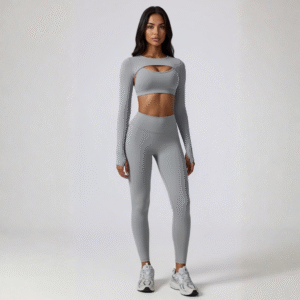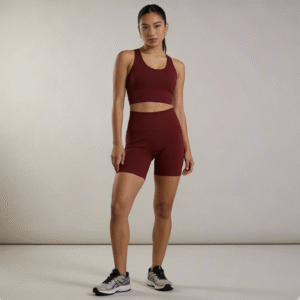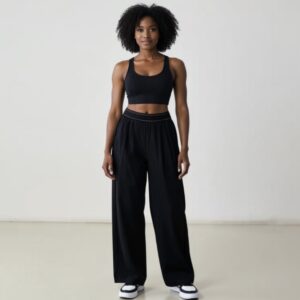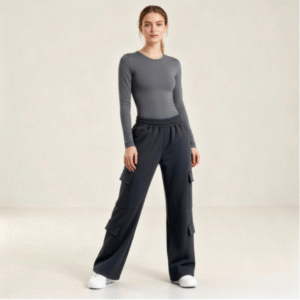


Last Updated: August 03, 2026
The best gym wear for cold weather UK is a considered layering system: a breathable base layer, a thermal mid-layer, and a water-resistant outer shell, all crafted from performance fabrics that manage moisture while trapping warmth. This approach keeps you comfortable from your front door to your final rep, without the bulk of traditional winter clothing.
British winters present a unique challenge for women who train. One morning offers frost and biting wind; the next brings relentless drizzle and grey skies. Your favourite summer leggings simply won’t cut it when the mercury drops below 6°C. Yet the solution isn’t to pile on heavy jumpers that restrict movement. The answer lies in understanding how your body regulates temperature during exercise and choosing semi-luxe sportswear that works with your physiology, not against it.
At House of Tanera, our philosophy of “intentional wear” has always centred on pieces that adapt to your lifestyle. When designing for cold weather, we consider fabric weight, thermal efficiency, and the reality of training in a climate that rarely offers perfection. Whether you’re heading to an unheated studio, running outdoor circuits, or walking to the gym in the dark, your activewear UK wardrobe needs to perform on multiple levels.
Why Does Cold Weather Training Require Different Activewear UK Choices?
Your body’s thermal regulation changes dramatically during exercise. As you warm up, blood flow increases to your muscles, and your skin begins to sweat. In cold conditions, this sweat becomes dangerous if it remains trapped against your skin. Traditional cotton or basic fleece absorbs moisture, which then cools rapidly, leading to that dreaded chill that settles in midway through your session.
This is why moisture-wicking technology is non-negotiable for cold weather workouts. Quality modest activewear UK brands and mainstream labels alike use synthetic fibres or merino wool to pull sweat away from the body, allowing it to evaporate before it can cause a temperature drop. The science is clear: a damp base layer conducts heat away from your body up to 25 times faster than a dry one. That single fact transforms how you should approach winter training wear.
Beyond moisture management, you need to consider thermal insulation that doesn’t impede movement. Heavy knitwear might keep you warm while stationary, but it restricts your range of motion during a squat or a yoga flow. Modern performance fabrics use grid-fleece or brushed-back constructions to trap air between fibres, creating warmth without the weight. This is where capsule wardrobe thinking comes into play: investing in a few high-quality, versatile pieces beats owning a drawer full of mediocre winter basics.
Which Fabrics Should You Prioritise for Cold Weather Workouts?
The fabric composition of your gym wear determines its suitability for cold conditions. Merino wool has gained popularity in athletic circles for good reason. It regulates temperature naturally, resists odour even after multiple wears, and handles moisture brilliantly. However, it comes with a higher price point and requires careful laundering. For those seeking a more accessible option, technical synthetics such as polyester and nylon blends remain the industry standard.
Look for fabrics with a brushed interior. This feature creates micro air pockets that retain body heat, much like thermal underwear. Many premium brands now offer fleece-lined leggings with a smooth outer surface that resists wind. These provide the warmth of winter tights without the unflattering bulk. If you prioritise sustainable fashion, seek out recycled polyester options. At House of Tanera, our The Grounding Era collection incorporates recycled fibres that deliver warmth while respecting the planet.
For outer layers, look for water-resistant treatments like DWR (durable water repellent) coatings. These allow rain to bead off rather than soaking in, keeping you dry during those drizzly commutes to the gym. A lightweight shell jacket that packs into its own pocket is a versatile addition to any winter training wardrobe. The key is breathability; a non-breathable waterproof layer will have you sweating profusely within minutes of exercise.
How Do You Layer Activewear UK Pieces for Maximum Warmth?
The layering system used by outdoor athletes translates perfectly to gym wear for cold weather UK. Start with a snug base layer that sits against your skin. This should be fitted, not loose, to maximise moisture wicking. Avoid seams that might chafe under a backpack or harness.
Your mid-layer provides insulation. A quarter-zip pullover or a long-sleeve top in brushed jersey works well. The zip offers ventilation control; as you warm up, you can unzip slightly to release heat without removing your layer entirely. For lower body warmth, fleece-lined leggings or running tights with a windproof front panel are excellent choices.
The outer layer is your protection against the elements. In dry cold, a lightweight softshell works perfectly. In wet conditions, you’ll need something with a proper water-resistant membrane. Importantly, your outer layer should have pit zips or mesh vents to allow excess heat to escape. Trapped heat leads to excessive sweating, which defeats the purpose of your layering system.
| Feature | Basic Cotton Set | Standard Synthetic Set | House of Tanera |
|---|---|---|---|
| Moisture Management | Absorbs sweat, stays wet | Wicks moisture away | Multi-directional wicking with brushed interior warmth |
| Thermal Insulation | None when wet | Moderate, depends on density | Engineered thermal zones for core warmth |
| Range of Motion | Restrictive, bulky | Good, but seams may limit stretch | Four-way stretch with flatlock seams |
| Drying Time After Rain | Very slow, stays damp | Quick dry properties | Fast-drying with odour control finish |
What Specific Features Should You Look For in Winter Leggings?
Winter leggings are the foundation of any cold weather training wardrobe. The best pairs offer a high waist for core coverage, with a brushed fleece or thermal lining inside. Fabric weight matters; look for something in the 300-400 GSM range for genuine winter warmth. Standard summer leggings typically fall between 200-250 GSM, which explains why they feel so inadequate when temperatures plummet.
Seam placement becomes crucial in winter. Flatlock seams prevent chafing when you’re layering multiple pieces. Pocket placement also requires consideration. In colder months, you likely need to carry keys, a phone, and perhaps a headlamp for dark commutes. Look for leggings with zip pockets to keep essentials secure without affecting the silhouette.
For those who train outdoors in particularly harsh conditions, consider windproof leggings. These feature a laminated panel at the front, protecting your quads from icy gusts while allowing your hamstrings to breathe. This asymmetric design acknowledges that different areas of your body have different thermal needs during exercise.
At The Liquid Era collection, we’ve designed our thermal leggings with a brushed back and a sculpting front panel. The waistband sits high enough to provide lumbar support during weighted squats, while the fabric composition includes elastane for that essential stretch recovery. It’s the kind of intentional design that makes a visible difference during a 5am run.
How Do You Choose the Right Upper Body Layers for Cold Gym Sessions?
Your upper body requires the most thoughtful approach in cold weather. Your core generates significant heat during exercise, but your extremities lose it quickly. This means your torso layers should be thinner and more breathable than you might expect, while your hands, ears, and neck require dedicated protection.
A long-sleeve top made from a mid-weight technical knit is ideal as your base layer. It should fit snugly but not restrictively, with raglan sleeves or gusseted underarms for full range of motion. Some women prefer a mock neck design, which provides subtle warmth without the bulk of a full turtleneck. For those practising modest activewear preferences, extended-length tops that offer additional hip coverage are available from specialist brands.
Your mid-layer might be a lightweight fleece or a zip-up jacket. The critical feature here is the ability to ventilate. A quarter-zip or full-zip design lets you dump heat quickly during high-intensity intervals without removing an entire layer. Opt for pieces with thumbholes; they keep sleeves in place during movement and provide a touch of extra warmth for your wrists.
Does a Sports Bra Count as a Layer in Cold Weather?
The sports bra is indeed your first layer. In cold weather, a bra with higher coverage provides more warmth and support. Many women switch from racerback styles to full-coverage designs during winter months, as these protect more of the torso. If you train outdoors, consider a bra with a higher neckline to trap warmth around your upper chest.
The material of your sports bra matters too. Seamfree knit constructions reduce chafing when worn under additional layers. Avoid cotton-lined bras during winter workouts; they trap moisture and increase your risk of post-exercise chills. Choose polyester or nylon blends with excellent moisture-wicking properties from the first layer outward.
Are There Modest Activewear UK Options That Work Well in Winter?
Absolutely. Cold weather and modest clothing requirements can work together beautifully. Many modest activewear UK pieces are naturally suited to winter training due to their extended coverage. Longer tops, looser fits, and additional layers align perfectly with effective winter layering systems.
The challenge arises when modest activewear is made from heavy, non-breathable fabrics. Traditional materials like thick jersey or fleece can trap excessive heat, making workouts uncomfortable. The solution is to seek out modest pieces crafted from technical performance fabrics, designed specifically for athletic use.
Look for longline tops with dropped hems, designed with moisture-wicking polyester blends. These provide the coverage you want without the overheating risk. Layering a lightweight, longer-length base layer under a slightly looser over-layer creates an effective system that respects your preferences while ensuring thermal regulation. Our The Becoming Era collection includes several pieces designed to provide extended coverage while maintaining a flattering, athletic silhouette.
What Accessories Are Essential for Cold Weather Gym Sessions?
Accessories often determine whether your cold weather workout is enjoyable or miserable. A thermal headband or beanie prevents heat loss from your scalp, which accounts for a significant portion of your body’s overall heat dissipation. For outdoor training, choose a hat with a moisture-wicking band to pull sweat away from your forehead.
Gloves are another non-negotiable. Look for running gloves with touchscreen-compatible fingertips, allowing you to use your phone without exposing your hands to the cold. For extremely cold conditions, mittens are warmer than gloves, but they restrict dexterity. Some brands offer convertible options that flip back for finger-free movement.
A neck gaiter or buff is perhaps the most versatile winter accessory. You can wear it as a neck warmer, pull it up as a face covering during intense wind, or use it as a headband. Choose a seamless, lightweight option made from a stretchy synthetic blend that won’t irritate your skin. A thin merino buff is an investment piece that delivers exceptional versatility.
How Do You Build a Winter Capsule Wardrobe for Training?
A capsule wardrobe approach saves money, space, and decision fatigue. For cold weather training, you don’t need dozens of pieces; you need a core selection of high-quality items that work together. Begin with three base layers: one short-sleeve, one long-sleeve, and one sleeveless option. These provide the foundation for various temperatures and intensities.
Two pairs of thermal leggings suffice; one for everyday training, one for outdoor sessions. Add one mid-layer, either a quarter-zip top or a lightweight fleece. Complete the system with one water-resistant shell jacket and one windproof gilet. For accessories, one hat, one pair of gloves, and one neck gaiter cover all scenarios.
This considered approach reduces waste and ensures every item you own gets worn regularly. The semi-luxe sportswear philosophy recognises that fewer, better pieces outperform a wardrobe packed with impulse purchases. When you invest in quality, each item retains its shape, colour, and performance through multiple winters of wear.
Key Takeaways
- Layer using a three-tier system: base, mid, and outer
- Prioritise moisture-wicking fabrics; avoid cotton for base layers
- Look for brushed interiors and thermal finishes in leggings
- Ventilation features like zips and mesh are essential for temperature control
- Choose water-resistant outer layers with breathable membranes
- Invest in accessories: hat, gloves, and neck gaiter
- Aim for a capsule wardrobe of versatile, high-quality pieces
Which House of Tanera Pieces Are Suited for Cold Weather in 2026?
This year, we’ve focused on developing pieces that bridge the gap between indoor and outdoor training. Our thermal collection features a brushed-back fabric with a smooth face, designed to layer seamlessly under outerwear or stand alone in milder conditions. The waistbands are engineered to sit comfortably under waterproof layers without creating uncomfortable pressure points.
Our long-sleeve tops incorporate a mock neck design, providing that extra bit of warmth many women seek in winter without the restriction of a full turtleneck. The fabric has a smooth, almost silk-like touch, making it comfortable against the skin while the interior traps warmth. Each piece is crafted in limited quantities, ensuring quality control and reducing overproduction, aligning with our commitment to sustainable fashion.
We’ve also expanded our outer layer offering with a lightweight, packable jacket that resists both wind and light rain. It features a two-way zip, allowing independent ventilation at the top and bottom. When not in use, it compresses into its own pocket, making it effortless to carry for those unpredictable British weather shifts.
Build your cold-weather training capsule with pieces designed for intentional movement.
How Should You Care for Your Winter Activewear to Extend Its Life?
Cold weather wear takes a beating. Salt from roads, mud from trails, and constant layering all contribute to fabric breakdown. Proper care begins with washing. Always check the care label; most performance fabrics should be washed at 30°C with a gentle detergent. Avoid fabric softeners, which coat synthetic fibres and reduce their moisture-wicking and breathability properties.
Air drying is essential for most activewear. The heat of a tumble dryer degrades elastane, causing your leggings to lose their shape and support. Hang items on a drying rack away from direct sunlight, which can fade colours and weaken fibres. If you must use a dryer, select the lowest heat setting possible.
Periodically, you’ll need to address odour build-up in technical fabrics. A specialised sports detergent or a vinegar rinse can help refresh these garments. For water-resistant jackets, the DWR coating will eventually wear off. Re-treating with a spray-on or wash-in DWR product every few washes will restore its water-shedding capabilities.
Is It Worth Investing in Premium Winter Gym Wear?
The short answer is yes, with caveats. Premium activewear uses higher-grade materials, more precise construction, and better quality control. This translates to garments that last longer, perform better, and maintain their appearance through repeated washing. However, “premium” does not automatically mean “best for you.” Consider the intended use and your personal requirements.
For the UK’s cold, damp climate, investing in a genuinely windproof and water-resistant outer layer is wise. A well-made jacket can last for years. Similarly, thermal leggings with robust fabric composition will outlast cheaper alternatives that pill or lose elasticity. These are items where spending slightly more yields significant long-term value.
Consider your training frequency honestly. If you train two to three times weekly during winter, you need a small but high-performing wardrobe. If you train daily, you may require more rotation pieces. Building a mindful collection of semi-luxe sportswear that aligns with your routine ensures every purchase is intentional, reducing clutter and environmental impact.
What Mistakes Should You Avoid When Buying Winter Activewear?
One common error is overdressing. When you begin your workout, you should feel slightly cool, knowing that within five minutes of movement, your body heat will rise. If you feel perfectly warm before you start, you’ll likely overheat and sweat excessively once you get going.
Another mistake is ignoring fit. Winter wear that is too tight compresses insulating layers, reducing their thermal efficiency. Too loose, and you lose the moisture-wicking contact that your base layer needs. Look for a “second skin” snugness for base layers, with slightly more room in mid and outer layers to allow for air circulation.
Finally, avoid buying purely on aesthetics. A colour or pattern you love becomes less appealing if it performs poorly during your first rainy run. Focus on the technical specifications: fabric weight, breathability rating, water resistance level, and seam construction. Style matters, but function drives the winter training experience.