

Last Updated: August 03, 2026
The best outdoor workout clothes for women in the UK are semi-luxe, sweat-wicking layers designed for unpredictable weather, offering both performance and modest coverage without compromising on style or comfort.
British summers are unpredictable at best, and by August in 2026, we are already seeing the first hints of autumn’s chill in the air. If you are training outdoors, whether that is a dawn run along the canal, a park HIIT session, or an evening yoga flow on the grass, your kit has to work harder than ever. The days of choosing between a flimsy vest that leaves you exposed or a heavy hoodie that soaks up sweat are over. What you need is a considered layering system that moves with your body, respects your values, and keeps you comfortable from the first warm-up to the final stretch.
At House of Tanera, we believe in intentional wear for your body, your lifestyle, and your evolution. That means building an outdoor activewear wardrobe that transitions effortlessly between seasons, activities, and moments of your day. It means choosing fabrics that breathe, cuts that honour your modesty preferences, and pieces that make you feel powerful, not restricted.
Why Is Layering the Secret to Outdoor Training in the UK?
The UK climate presents a unique challenge for outdoor athletes. According to Met Office data, the average summer temperature in the south of England hovers between 18 and 22 degrees Celsius, but that rarely tells the whole story. A single session might begin with drizzle, move into warm sunshine, and finish with a gusty wind. The only way to manage this is through a smart layering system.
Start with a base layer that wicks moisture away from your skin. This is non-negotiable. Cotton, whilst breathable, absorbs sweat and leaves you cold and clammy the moment you slow down. Instead, look for technical blends, such as a polyester or nylon mix, that pull perspiration to the surface where it can evaporate. For women who prefer modest activewear, a longer-line base layer with a higher neckline offers coverage without the bulk of a second top.
Your mid-layer is where insulation lives. In the UK, a lightweight fleece or a brushed-back jersey is often enough, even in autumn. The key is breathability. You do not want to trap heat; you want to regulate it. Finally, an outer shell protects you from rain and wind. Choose a packable jacket with sealed seams if you are serious about running, or a soft-shell option if your training is more static, such as outdoor yoga or Pilates. This is where The Becoming Era collection shines, offering pieces designed to move seamlessly across these three layers.
Which Fabrics Actually Perform for Outdoor Workouts?
Fabric choice is the difference between a session that feels effortless and one that feels like a battle against your own clothes. When we talk about semi-luxe sportswear, we are talking about fabrics that have been developed with intention, tested for real movement, and constructed to last beyond a single season.
Look for a few key properties. Moisture-wicking technology is essential; it draws sweat away and aids evaporation. Four-way stretch ensures your fabric moves with you, not against you, during lunges, squats, and dynamic stretches. Odour control is another marker of quality, often achieved through silver-ion or bamboo-derived treatments. And for outdoor training specifically, a degree of UPF protection is wise, even on overcast days, as UV rays penetrate cloud cover.
At House of Tanera, our fabric development process focuses on creating a hand-feel that is soft against the skin yet dense enough to provide shaping and support. We avoid the flimsy, see-through materials that plague lower-quality activewear. Our fabrics are opaque, breathable, and structured, so you can move with confidence, whether you are bending, stretching, or sprinting. This focus on textile integrity is what separates considered performance wear from fast-fashion activewear that loses its shape and function after a few washes.
| Feature | Standard Polyester | Cotton Blend | House of Tanera |
|---|---|---|---|
| Moisture Wicking | Good, but can feel synthetic | Poor, absorbs and holds sweat | Excellent, engineered for rapid evaporation |
| Breathability | Moderate, depends on weave | High, but compromised when wet | High, with strategic ventilation zones |
| Durability | Pills and loses shape quickly | Stretches out over time | Retains structure through repeated wear |
| Modest Coverage | Often too clingy | Can be too heavy | Designed with longer lengths and higher necks |
How Do You Build a Capsule Wardrobe for Every Season?
A capsule wardrobe for outdoor training is not about owning dozens of pieces; it is about owning the right few. The goal is versatility. Every item should be able to play multiple roles, pairing with the rest of your kit to create outfits suitable for a 10k run, a strength session in the park, or a casual coffee catch-up afterwards.
Begin with high-quality leggings. For outdoor wear in the UK, opt for a full-length, high-waisted style in a mid-weight fabric. They should feel like a second skin, offer tummy control without squeezing, and have a secure pocket for your keys or phone, because carrying things in your hands disrupts your form. A pair of durable, opaque leggings will be the workhorse of your outdoor wardrobe.
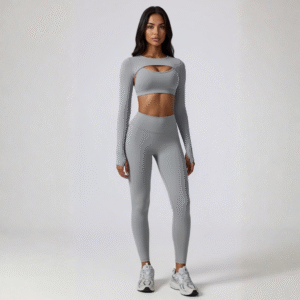
Next, consider a long-sleeve top. This is where modest activewear becomes a stylistic choice rather than a limitation. A fitted, longer-cut top with thumbholes keeps sleeves in place during movement and provides extra hand coverage against the cold. Pair it with a breathable sports bra. If you prefer more coverage, a relaxed-fit tunic or an open-back jacket in a complementary colour adds a layer of polish.
Finally, invest in a versatile outer layer. A lightweight, water-resistant jacket that can be scrunched into a tiny pouch is essential for UK weather. Alternatively, a structured hoodie in a technical fabric can serve as both your warm-up layer and your cool-down companion. The The Grounding Era collection was designed with this exact approach in mind, offering grounding tones and balanced silhouettes that anchor your outdoor kit.
What Should You Look for in Leggings for Outdoor Running?
Running places unique stresses on your clothing. Your leggings must withstand high-friction movement, all while maintaining opacity and structure. This is where fabric density matters most. A good technical legging should have a high denier count, meaning it is tightly knit and resistant to sheerness when stretched.
Consider the waistband design. A wide, high-rise waistband offers core support and prevents the dreaded mid-run roll-down. Look for one with a hidden drawcord for a customisable fit. The rise should be high enough to cover your stomach comfortably, especially if you are layering with a crop top or a fitted t-shirt.
Seam placement also affects comfort. Flatlock seams, which sit flush against the skin, are vital for chafe prevention. The last thing you need on a long run is a thick seam rubbing against your inner thighs. Our approach at House of Tanera is to place seams away from high-friction zones, ensuring your focus remains on your pace, not your pants. We also offer extended inseam lengths across our outdoor range, catering to taller women who often struggle to find coverage that reaches their ankles.
Pocket design should be practical, not an afterthought. A single large pocket at the back of the waistband is ideal for storing a phone securely, as it keeps the weight centred and prevents uncomfortable bouncing. Side pockets, while convenient, should be deep enough to hold items without them sliding out during dynamic movement.
How Does Modest Activewear Fit into Outdoor Training?
Modest activewear is not about hiding; it is about providing options. For many women, whether for religious, cultural, or personal reasons, feeling fully covered is a non-negotiable prerequisite for feeling confident and comfortable during exercise. Yet historically, the activewear market has treated modesty as an afterthought, offering oversized, shapeless garments that hinder performance.
The shift towards modest activewear in 2026 signals a broader understanding within the industry: performance and coverage can coexist beautifully. The key is in the cut. A modest top should be fitted through the shoulders and torso to allow freedom of movement, but longer in the body to provide hip coverage. Sleeves should be full-length or three-quarter, with a comfortable cuff that does not restrict circulation.
For bottoms, skirts or skorts worn over leggings are a popular choice for outdoor activities, offering additional coverage without adding excessive layers. The fabric must be equally technical, allowing for a full range of motion. Consider the weight of the garment; a heavy layer will make you overheat quickly. Look for lightweight, breathable constructions that feel almost weightless during movement. This inclusive approach is central to our philosophy at The Liquid Era collection, which features fluid, draped pieces designed to provide coverage with grace and ease.
Which Outer Layers Protect Against UK Wind and Rain?
An effective outer layer must do more than look good. It must shield you from the elements without trapping excessive heat. For the UK, a breathable waterproof jacket is arguably the most valuable piece in your outdoor kit. Gore-Tex and similar membranes offer excellent waterproofing, but they come at a premium. For semi-luxe alternatives, look for jackets with a hydrostatic head rating of at least 10,000mm and critically taped seams.
Ventilation is just as important as waterproofing. Pit zips, which open under the arms, provide essential airflow during high-intensity activity. Without them, you will overheat quickly, leading to excessive sweating that leaves you damp from the inside out. A good running jacket should feel like a microclimate, allowing you to stay warm and dry while remaining breathable.
For less intense activities, such as outdoor yoga or a gentle walk, a softshell jacket offers a better balance. Softshells are water-resistant, wind-resistant, and highly breathable. They provide warmth without bulk, and they have a softer, more flattering drape than a technical hardshell. This makes them ideal for transitioning from moving meditation to a coffee run in the same outfit.
Key Takeaways
- Layering is non-negotiable for UK outdoor training; investing in technical base, mid, and outer layers is better than buying one heavy coat.
- Prioritise opacity, durability, and flatlock seams when selecting leggings for running and dynamic movement.
- Modest activewear in 2026 is about performance engineering, not just longer fabric lengths.
- Build a capsule of versatile pieces like the collections at House of Tanera to ensure year-round readiness.
- Breathability in outer layers is crucial to prevent overheating, even in cold weather.
Can Sustainable Fashion Perform as Well as Synthetic Fabrics?
There is a persistent myth that sustainable fabrics are inferior for high-performance activities. In 2026, this is no longer true. The industry has evolved significantly, with recycled materials and innovative natural fibres now matching, and often exceeding, the performance of virgin synthetics.
Recycled polyester, made from plastic bottles and textile waste, offers the same moisture-wicking properties as virgin polyester but creates far less environmental impact. It requires less energy to produce and keeps plastic out of landfills. Similarly, the use of responsibly sourced bamboo or Tencel, which is derived from wood pulp, offers remarkable breathability and softness, making them excellent choices for base layers and yoga wear.
The question is whether these eco-friendly fibres can withstand the rigours of regular outdoor training. The answer is yes, provided they are blended correctly. A yarn that combines recycled polyester with a small percentage of elastane offers both durability and stretch. Merino wool, a completely natural and renewable resource, remains one of the best base-layer fabrics for cold weather, as it regulates temperature and resists odour better than any synthetic alternative.
The key takeaway is that choosing sustainable fashion does not mean compromising on quality. In fact, these materials are often better. They last longer, they feel better, and they break down more responsibly at the end of their life. This focus on longevity aligns perfectly with our definition of semi-luxe sportswear: pieces that are worth the investment because they hold their shape, colour, and functionality season after season.
How Important is Fit and Functionality for Outdoor Workouts?
Fit is an intensely personal thing, but it is also a performance metric. Clothes that are too loose will flap in the wind, catch on branches, and create friction. Clothes that are too tight will restrict circulation, hinder movement, and be deeply uncomfortable. The ideal fit allows for a full range of motion while staying close enough to the body to manage moisture and temperature.
Consider the specific activity. For running, you want a streamlined fit that reduces wind resistance. For yoga or Pilates, you need a fit that accommodates deep stretches and inversions without pulling or gaping. This is why a one-size-fits-all approach to activewear fails so many women. We believe in designing with a more considered fit, taking into account different body shapes and coverage needs.
Functionality extends beyond fit. Consider the inclusion of reflective details for those early morning or late evening sessions when UK daylight is limited. A zip pocket with a key clip is a small detail that makes a huge difference. A high neckline acts as a shield against wind chill. Each design element serves a purpose, contributing to a more focused, more enjoyable training experience.
Where Can You Find Quality Boutique Activewear in the UK?
The UK has a thriving community of independent brands crafting activewear UK consumers love, but it can be difficult to know which ones truly deliver on their promises. Fast fashion giants produce vast quantities of garments with high markups and low quality. Bikram studios and high-end boutique labels can be prohibitively expensive without offering proportional benefits.
The sweet spot lies with brands like House of Tanera, who occupy the semi-luxe space. We offer the considered design, premium fabrics, and sophisticated aesthetic of a luxury label, but with a pricing structure that is transparent and intentional. We do not cut corners on construction; every seam, hem, and zip is chosen for reliability. Our garments are produced in limited runs, which reduces waste and ensures a level of quality control.
When evaluating a brand, consider their transparency. Do they discuss their fabric sourcing? Do they provide detailed size guides? Do they offer care instructions that suggest longevity? A brand that invites you to understand its process is a brand that stands behind its product. By building a relationship with an independent label, you also bypass the monotony of mass-produced designs, gaining a wardrobe that feels unique and personal.
Ready to find your perfect outdoor training pieces? Explore our collections and build a kit that supports your every move.
How Do You Care for Technical Fabrics to Extend Their Life?
Investing in quality outdoor wear is the first step; caring for it correctly is the second. Technical fabrics are engineered to perform, but they require specific maintenance to keep doing so. Harsh detergents, fabric softeners, and high-heat drying can break down the fibres, elastics, and moisture-wicking treatments over time.
Wash your activewear in cold water, ideally with a specialist sport detergent that is free from enzymes and optical brighteners, which can degrade stretch fibres. Avoid fabric softeners entirely; they coat the fibres and compromise their ability to wick moisture. Always air dry your garments. The heat from a tumble dryer is one of the fastest ways to ruin the elasticity and fit of your leggings and sports bras.
Proper storage also matters. Fold or hang your items immediately after they are fully dry. Avoid leaving damp activewear in a gym bag, as this can cause mildew and permanent odours, which are notoriously difficult to remove from synthetics. By treating your kit with the same care you would give a fine garment, you ensure it performs for years, supporting your evolution without needing constant replacement.
What Is the Future of Outdoor Activewear in the UK?
As we move further into 2026, the lines between athletic wear, loungewear, and everyday fashion are increasingly blurred. The outdoor wardrobe is no longer a separate category; it is a reflection of a lifestyle where movement is integrated into daily life. We are seeing a demand for pieces that are equally suited to a sunrise workout and a midday walk.
This evolution places more responsibility on brands to create versatile, durable, and ethically made clothing. The consumer of today and tomorrow is asking tougher questions about provenance, material impact, and longevity. They are rejecting the disposable culture of fast fashion in favour of a more mindful approach to consumption.
At House of Tanera, we are committed to this future. We design with intention, produce with responsibility, and encourage our community to buy less, choose well, and make it last. The best outdoor workout clothes women UK have to offer are the ones that empower you to show up consistently, regardless of the weather forecast, and feel completely yourself while doing so.
Similar Posts
The Art of Semi Luxe Athleisure Wear
Last Updated: January 01, 2026 Introduction Semi luxe athleisure wear represents the pinnacle of modern dressing: clothing that effortlessly blends comfort, style, and intention. It’s the quiet confidence of a perfectly tailored jogger, the understated elegance of a technical knit that moves with you. This is the space where performance meets polish, creating a versatile…
Timeless Athleisure Staples for the Modern UK Wardrobe
Last Updated: January 16, 2026 Introduction Imagine opening your wardrobe to find only pieces you love, that fit perfectly, and move with you from one part of your day to the next. This is the promise of timeless athleisure staples. These are not just clothes for the gym; they are the foundation of a modern,…

What Are the Best Gym Leggings For Curves in the UK?
Discover the best gym leggings for curves in the UK for ultimate support and style. Find your perfect fit now
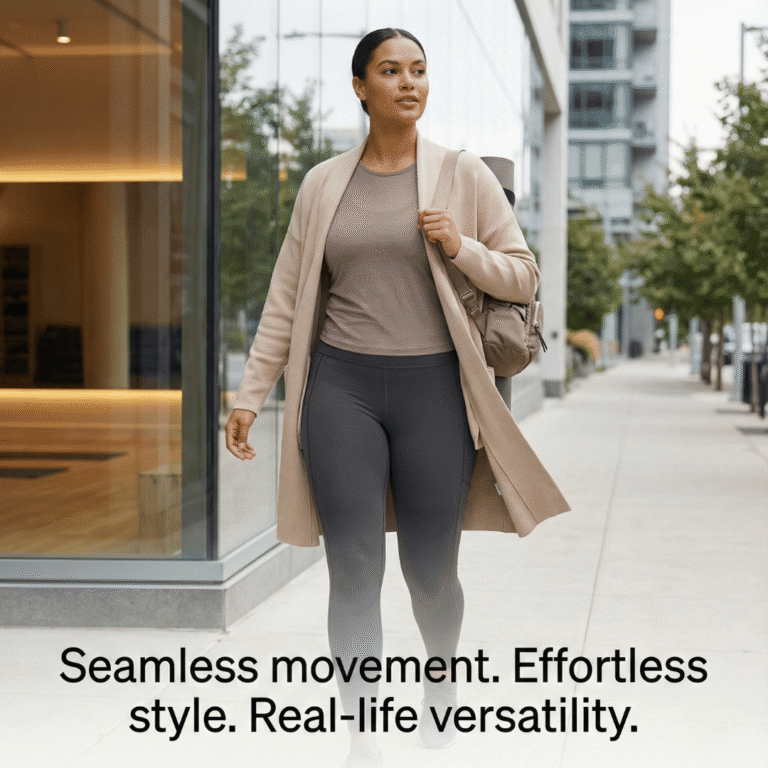
The Ultimate Guide to Premium Activewear Essentials in the UK
Last Updated: December 07, 2025 Introduction Premium activewear essentials in the UK represent more than just gym clothes. They are the foundation of a modern, intentional wardrobe. These are pieces designed for movement, comfort, and effortless style that transitions throughout your day. They answer the call for clothing that works as hard as you do,…

The Intentional Wardrobe: Redefining Women’s Active Clothing in 2026
Redefine your activewear in 2026. Discover intentional UK women’s active clothing for mindful movement. Explore the collection
What Are the Best Loungewear Gift Set Women UK in the UK?
Discover the best loungewear gift set women UK options for ultimate comfort and style. Explore our curated picks for her perfect present